Indian Diplomacy in Iran US War
|
Getting your Trinity Audio player ready...
|
DEBATE
The following is a structured debate regarding India’s diplomatic positioning during the 2026 Iran-US War, reflecting the geopolitical shifts and domestic crises triggered by the conflict.
FORMAT OF DEBATE
Topic: Indian Diplomacy in the Iran-US War (2026).
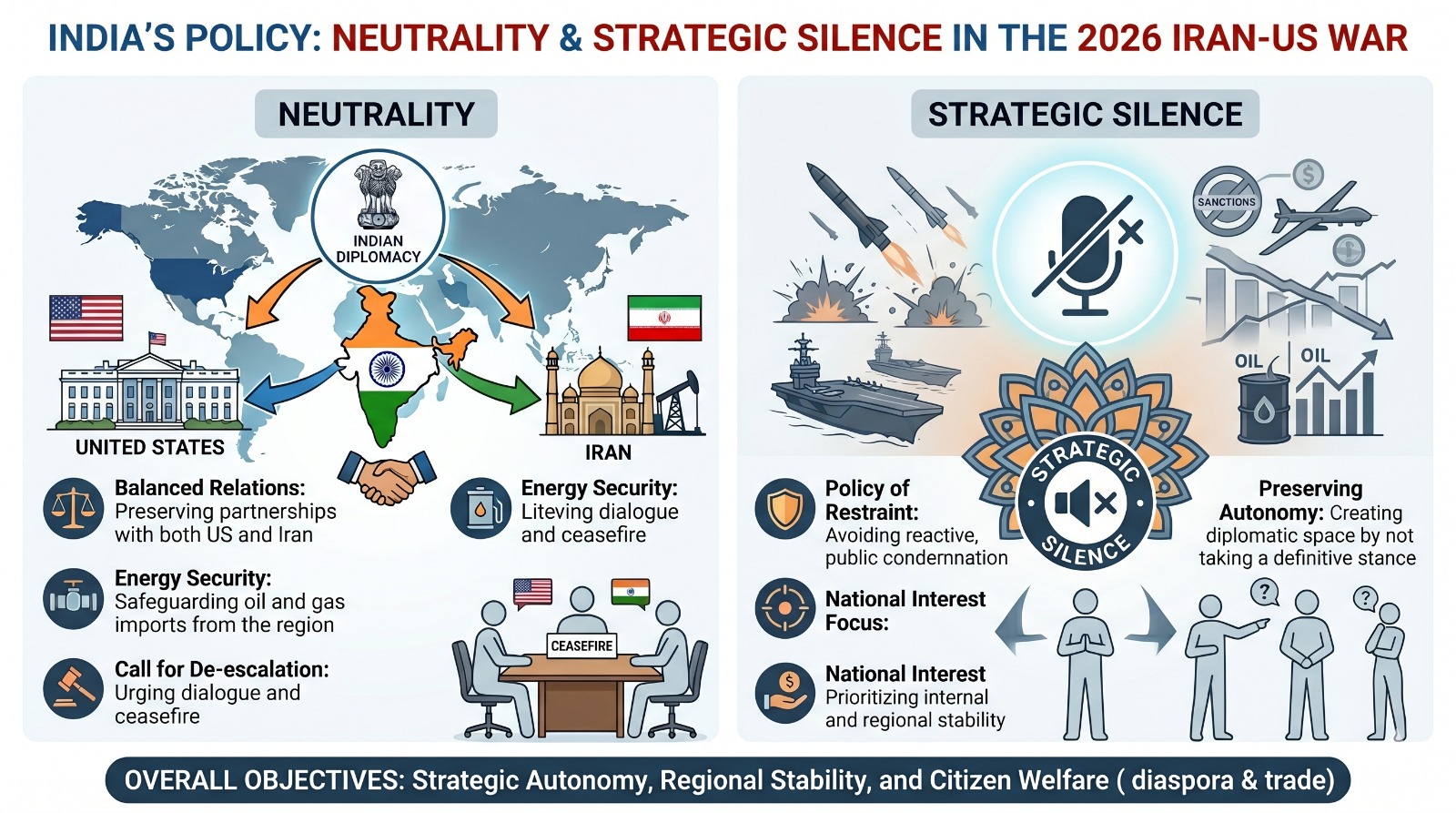
Motion: India’s policy of ‘Neutrality and Strategic Silence’ in the 2026 Iran-US War is a calculated necessity rather than a sign of diplomatic irrelevance.
Thesis Statement: While the 2026 conflict has severely impacted India’s energy security and regional influence, the core of the debate lies in whether New Delhi’s refusal to pick a side preserves its long-term autonomy or signals a failure to act as a Net Security Provider in its own neighbourhood.
Side I: In Favour (Calculated Necessity)
Main Idea: India’s neutrality is the only viable path to protect its massive diaspora, maintain multi-alignment with rival superpowers, and prevent long-term hostility from either the U.S. or Iran.
Opening Statement: In one of the most dangerous geopolitical crises of the decade, expecting perfect neutrality is unrealistic. India’s decision to maintain ‘Strategic Silence’ is not an absence of policy; it is a policy of survival. By refusing to condemn either the U.S.-led strikes or Iran’s retaliatory closures, India preserves the space required to protect its national interests without being dragged into a war not of its making.
Arguments:
Diaspora Safety: With 9 million Indians in the Gulf, any overt alignment would turn our citizens into political leverage or targets. Neutrality is the shield that ensures their continued safety and potential evacuation.
Maintaining Multi-Alignment: India has critical, non-negotiable ties with both sides: the iCET partnership with the U.S. for high-tech defence and the Chabahar Port with Iran for access to Central Asia. Siding with one would permanently bridge-burn the other.
Energy Prudence: Although the Strait of Hormuz closure has spiked LPG prices, open hostility toward Iran would ensure that Indian vessels are targeted permanently, whereas our current neutrality allows for back-channel negotiations, such as those regarding the unintentional firing on Indian ships in April 2026.
Preservation of Strategic Autonomy: India avoided military involvement or blind alignment, kept future options open, and continued strengthening defence and technology ties with Israel and the US.
Conclusion: India’s diplomacy has delivered concrete results energy stability, citizen safety, and preserved relationships. In a complex and volatile conflict, this pragmatic approach is undoubtedly a strategic success.
Side II: Against (Strategic Irrelevance)
Main Idea: Selective neutrality and a perceived tilt towards the US-Israel axis have damaged India’s long-term credibility, regional influence, and claim to genuine strategic autonomy.
Opening Statement: India’s so-called neutrality has been neither neutral nor strategically sound. By staying largely silent on US-Israeli strikes and the assassination of Iran’s Supreme Leader while strongly criticising Iranian retaliation, India has compromised its independent foreign policy and missed a golden opportunity for leadership.
Arguments:
Loss of Regional Leadership: The emergence of Pakistan as the primary mediator between Washington and Tehran has allowed Islamabad to regain global diplomatic relevance at India’s expense. India is no longer the Net Security Provider, if it cannot influence peace in its own backyard.
Economic Vulnerability: By failing to take a proactive stance, India has become the largest non-hostile casualty. The lack of strategic LPG reserves and the total disruption of trade through the Strait of Hormuz show that ‘silence’ does not protect the economy; it only delays our response to the crisis.
Credibility Gap: The sinking of the IRIS Dena by the U.S. immediately after it participated in Indian naval exercises shows that our strategic partnerships do not even protect vessels associated with our military cooperation. Our silence in the face of such incidents makes India look weak, not autonomous.
Weakening Global South Leadership: By leaning towards the US-Israel side, India has diminished its standing in BRICS and the Global South.
Conclusion: Short-term interest protection cannot replace long-term strategic vision. India’s selective and cautious diplomacy has compromised its credibility and autonomy, making it a strategic failure rather than a success.
Rebuttals
Side I Rebuttal to Side II: Critics confuse neutrality with equidistance. India has no vital strategic interest in defending Iran’s nuclear programme or its aggressive actions in the region. Condemning attacks on Gulf states was essential to protect Indian lives and economy. Pakistan’s mediation role is temporary, while India’s deepening partnerships with the US, Israel, and Gulf nations provide far greater long-term leverage. Pragmatism is not weakness it is strength in a complex world.
Side II Rebuttal to Side I: Calling selective silence pragmatism is misleading. True strategic autonomy requires the courage to criticise violations of sovereignty by all powerful actors, not just the weaker side. By sidelining BRICS and traditional partners like Iran, India risks long-term isolation in West Asia and Central Asia. Short-term gains in energy and diaspora safety will prove costly when India loses diplomatic influence and credibility in the Global South.
Final Synthesis
The 2026 Iran-US War has exposed the limits of India’s Middle Path. India is currently navigating a transition from Non-Alignment to Multipolar Engagement). While Side II is correct that India has suffered a temporary diplomatic heartbreak regarding the mediation track, Side I is correct that a premature entry into the conflict would have been catastrophic for India’s energy and diaspora interests. The path forward for Indian diplomacy is to move from Strategic Silence to Strategic Mediation not by acting alone, but by leveraging the India-Arab Foreign Ministers’ Forum to create a collective pressure group that can reopen the Strait of Hormuz and protect the Global South from the fallout of West Asian wars. Neutrality was the right shield for the first 60 days of the war; active leadership will be the necessary sword for the months ahead.